 English
 中文简体
中文简体Feature:
1. Industrial compost product
2. Made with PLA
3. Eco friendly , from the earth, back to the earth
4. Anti Bacterial
5. Lower dyeing temperatures
6. Good UV stability

Two 75D/72F filament packages reach the same knitting mill in the same week. One is standard polyester, one is sold as recycled polyester. Both sit inside the same denier tolerance, both come with a tensile sheet, both ...
READ MOREA knitting mill can receive two lots of 150D/48F recycled polyester filament in the same week. Both arrive with the same rPET label and the same nominal denier. One runs through a 28-gauge circular machine without a sin...
READ MOREA 500 mL PET bottle weighs about 9 grams once the cap and label come off. A mid-weight knit top can take 250 to 400 grams of yarn, which means somewhere between 30 and 45 bottles end up on a hanger. That arithmetic is w...
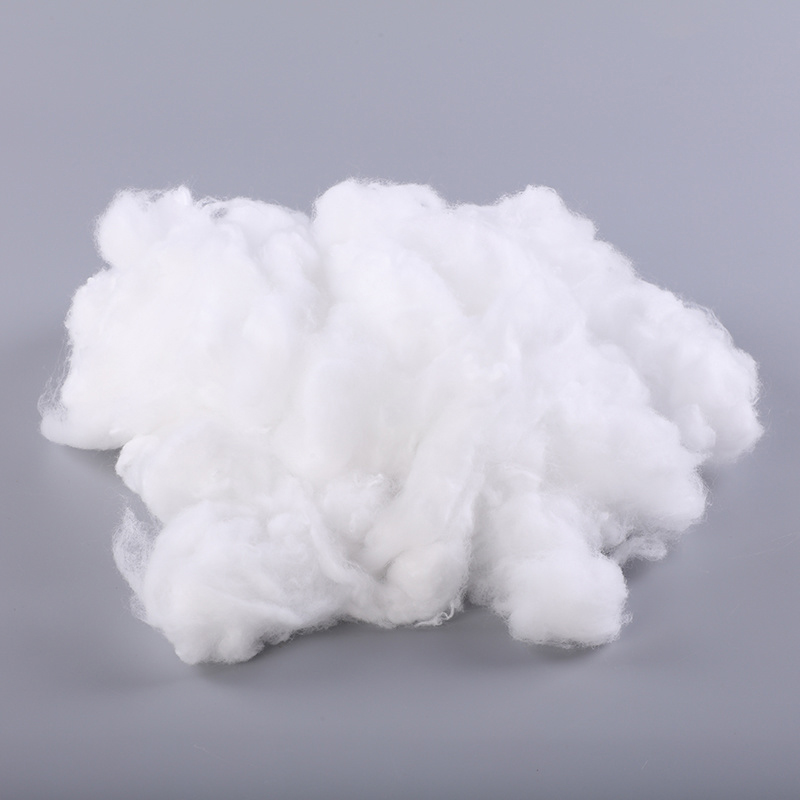
READ MOREPLA (Polylactic Acid) staple fiber is a bio-based polymer fiber derived from renewable plant resources such as corn starch and sugarcane, produced through fermentation and polymerization processes. Unlike conventional petroleum-based synthetic fibers, PLA fiber reduces reliance on fossil resources right from the source, making it a key direction in the textile industry's shift toward sustainable materials.
This fiber meets Industrial Compostable standards, meaning that under the specific temperature, humidity, and microbial conditions of an industrial composting environment, it can break down into water, carbon dioxide, and organic matter within a reasonable timeframe — truly embodying the concept of "from the earth, back to the earth."
The lactic acid components within PLA fiber's molecular structure give it a natural ability to inhibit bacterial growth, without the need for additional chemical antibacterial agents. This effectively slows microbial proliferation on the fabric surface, making it especially suitable for intimate apparel, home textiles, and medical protective products — offering end consumers a more hygienic and reassuring wearing experience.
Compared to conventional polyester fibers, which typically require dyeing at around 130°C, PLA fiber can achieve full color uptake at a lower dyeing temperature. This translates into:
PLA fiber demonstrates strong UV stability, resisting noticeable yellowing or strength loss under prolonged sun exposure. This makes it well suited for outdoor textiles, shading materials, and other applications requiring long-term exposure to sunlight.
| Comparison | PLA Biodegradable Fiber | Conventional Polyester Fiber |
|---|---|---|
| Raw Material Source | Renewable plant resources | Petroleum-based |
| Biodegradability | Compostable under industrial conditions | Difficult to degrade naturally |
| Dyeing Temperature | Lower | Higher |
| Antibacterial Property | Naturally inhibitive | Requires additional additives |
| UV Stability | Excellent | Average |
With its combined eco-friendly, antibacterial, and weather-resistant properties, PLA biodegradable staple fiber is widely used across the following areas:
As the global textile industry places growing emphasis on sustainability and the circular economy, PLA biodegradable staple fiber is emerging as a leading alternative to conventional synthetic fibers — helping brands and manufacturers meet environmental regulatory requirements while strengthening their market differentiation.
Please fill out the form below and our team will contact you as soon as possible.
Addres: No.66 Qiaogang Road, Haian, Nantong City, Jiangsu Province, China
E-mail: service@gcfiber.com admin@gcfiber.com
Copyright ? GC FIBER All Rights Reserved. Custom PLA Biodegradable Staple Fiber Manufacturers
